
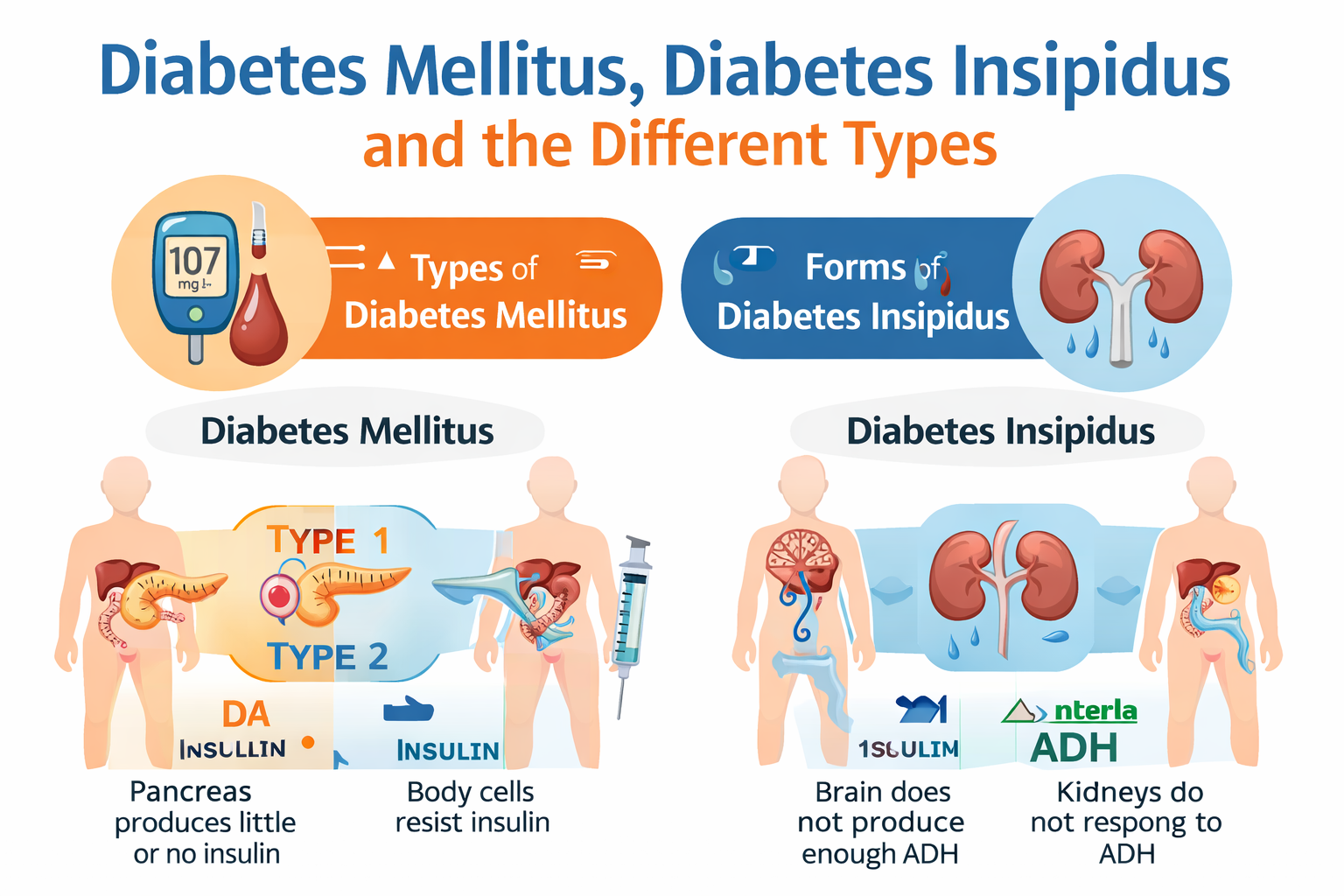
Diabetes Insipidus also called DI, a dis-order of salt and water metabolism marked by intense thrist and heavy urination. Diabetes Insipidus occurs when the body can’t regulate how it handles fluids the condition is caused by a hormonal abnormality and isn’t related to diabetes.
It is a rare condition that has nothing to do with the pancreas or blood sugar. It develops as a result of the stilted production of a hormone in the brain, which is released to stop the kidneys producing so much urine in order to retain water. In addition to extreme thirst and heavy urination, other symptoms may include getting up at night to urinate, or bed-wetting. Depending on the form of the disorder, treatments might include hormone therapy, a low-salt diet and drinking more water.
Diabetes Mellitus is more commonly known as diabetes. Diabetes Mellitus is a disease that occurs when your blood glucose, also called blood sugar, is too high. Blood glucose is your main source of energy and comes from the food you eat. Glucose is vital to your health because it’s an important source of energy for the cells that make up your muscles and tissues. It’s also your brain’s main source of fuel. Insulin, a hormone made by the pancreas, helps glucose from food get into your cells to be used for energy.
The underlying cause of diabetes varies by type. But, no matter what type of diabetes you have, it can lead to excess sugar in your blood. Too much sugar in your blood can lead to serious health problems.
There are 7 types of diabetes:
- Type 1 diabetes – where the body’s immune system attacks and destroys the cells that produce insulin
- Type 2 diabetes – where the body does not produce enough insulin, or the body’s cells do not react to insulin. Type 2 diabetes is far more common than type 1.
- Gestational diabetes – occurs in pregnant women. it is usually detected mid-way through the pregnancy at 24-28 weeks by a glucose test.
- Latent Autoimmune Diabetes Of Adulthood (LADA) – like type 1 diabetes, LADA occurs when the body stops producing enough insulin. Unlike type 1, however, the signs and symptoms of type 1 progress much slower and insulin may still be produced, though at a slower rate.
- Maturity Onset Diabetes Of The Young(MODY) – MODY is a very rare form of diabetes and is caused by a mutation change in a single gene which disrupts insulin production. It can affect any age. There are 11 types of MODY diabetes and each diagnosis will have a different diagnosis.
- Neonatal Diabetes Mellitus (NDM) – NDM is diagnosed very early in infants, anywhere from birth to 6 months old. The condition can be mistaken for type 1 diabetes, however, there is a difference because type 1 is rarely seen in patients before 6 months of age.
- Type 3 diabetes – is a term that has been proposed to describe the hypothesis that Alzheimer’s disease, which is a major cause of dementia. it results from resistance to insulin in the brain. People with type 2 disease have an increased risk of suffering from Alzheimer’s disease.
Type 1 and Type 2 diabetes are the most common type of diabetes.
General symptoms of diabetes include;
- feeling very thirsty
- frequent peeing than usual, especially at night
- extreme fatigue
- weight loss and loss of muscle bulk
- itching around the penis or vagina, or frequent episodes of thrush
- sores that don’t heal
- blurred vision
- increased hunger
Symptoms in men – In addition to the general symptoms of diabetes, men with diabetes may have a decreased sex drive, erectile dysfunction, and poor muscle strength.
Symptoms in womenIn addition to general diabetes women can also have symptoms such as urinary tract infections, yeast infections and itchy skin.
Type 1 diabetes can develop quickly over weeks or even days.Many people have type 2 diabetes for years without realizing because the early symptoms tend to be general.
CausesThere are no lifestyle changes that can make you to reduce your risk of type 1 diabetes.
You can help manage type 2 diabetes through healthy eating, regular exercise and achieving a healthy body weight.
Also Read: The Truth About Gluco6 After 30 Days (Honest Review)